 | 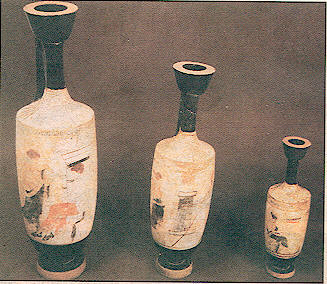 |

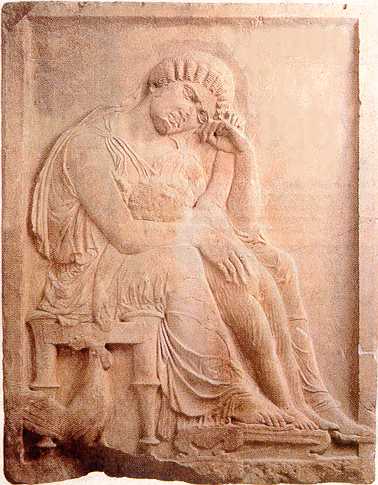
Excavations at Pydna have produced a lot of graves with arms, gold, silver, and bronze jewels, coins, and vessels. Most of them have been stored but few are on display in the Museum of Thessalonike (Salonica), Greece.
| |
In 1999 a group of archaeologists from the Univ. of Thessalonike (Salonica), Greece unearthed an unusally great number of "ovens" built in huts dating`between 2300 and 1900 BCE in Archontikos (Giannitsa region, North Greece). There were 3-4 ovens in each one of the huts but archaeologists have not yet concluded whether they were used for heating or cooking.
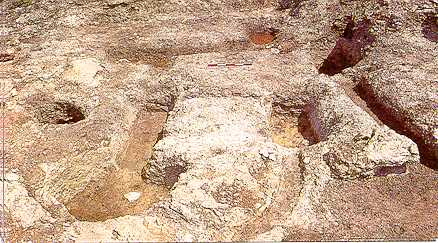
In classical times, Athenians got silver from the Lavrion mines in southeast Attica. Archaeologists Euaggelos.and Olgs Kakaboyiannis excavated in a nearby valley (Maroneia or modern Bertseko) a "washing" area used by ancient miners to purify the mined metal. It is claimed that the purification process as applied in Lavrion allowed ancient Athenians to exploit in the most efficient way the mines and built their hegemony in the 5th c.
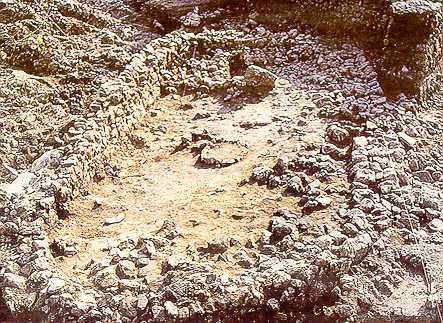
One of the earliest Macedonian settlements was Herakleion in the area of Krania (Piaeria in N. Greece). Archaeologists have excavated building of various periods including a 8th c. BCE oval construction.
 |  |  |
Greek Professor of Archaeology D. Pantermalis and his team have been excavating at Dion, Pieria, West Macedonia, Greece for years. Little by little they are unearthing a whole town. Dion is nowadays more than 1 m. under water level which makes excavations extremely difficult. Scattered excavation sites extent to an area of 10.000 sq. m. and the main artifacts are dated in the early 3rd c. BCE.
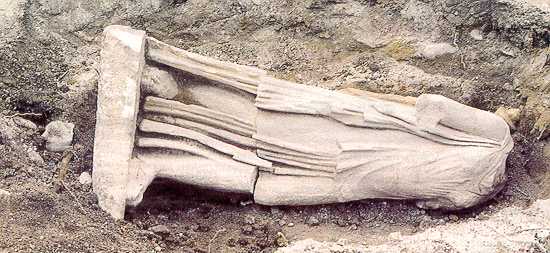 |
Pantermalis latest finding is the statue and the shrine of Artemis of Vaphyria. The statue was found in its shrine along with an inscription, all in situ, which makes the discovery a lot more important as archaeologists can draw conclusions regarding rituals and organization. The statue is a copy of the Artemis Collona model which was first made between 340-330 BCE. She is carrying arrows and a bow but she is wearing plain sandals instead of hunting shoes and her garments are not tied round her waist. The word Vaphyria added to her name shows that she was the protector of the local river flowing through Dion into the sea.
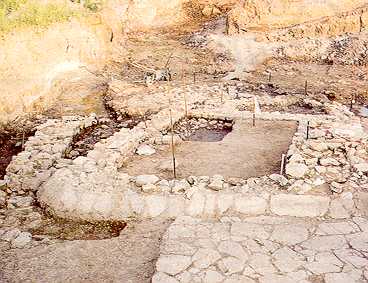
During works for the building of a new Court of Law at Hegoumenitsa, Epirus, Greece, archaeologists found the ruins of an ancient town.
 |
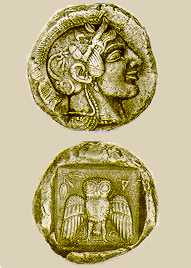
An anonymous friend of the Museum bought the silver Athenian coin in an auction in Germany and gave it to the Museum as a gift. There are only 24 other similar coins in the world and this is the only one in a Greek museum, as generally Athenians minted few silver coins. This coin was most probably minted only once in 460-650 BCE. What makes it different is the full size owl on the back. The coin previously belonged to an American collector.
Messene, Arcadia, the Peloponnese, Greece, has been an important town in Ancient Greek history. Although the Messenians fought three was against the Spartans they were subjugated and became a sort of a legend even during classical times.
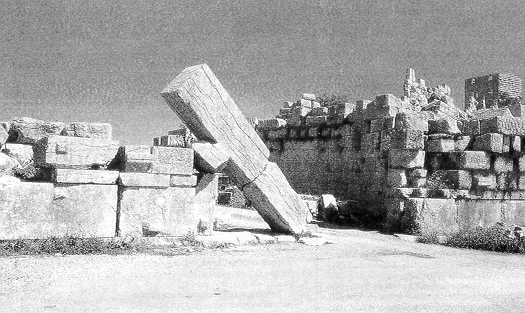 |
Since 1987 Professor of Arcaheology P. Themelis supported by the Greek Archaeological Society has been unearthing Ancient Messene. In 369 BCE Theban general Epameinondas liberated Messene and built the city of Messene, as the capital of the new autonomous Messenian State. Themelis found that the city was protected by a 9.5 klm. long wall and its main gate was the Archaden Gate that one can see even today. Parts of statues of the local artist Damophon, who lived in early 2nd BCE century, have been found and are examples of monumental sculpture that is rare outside Athens.
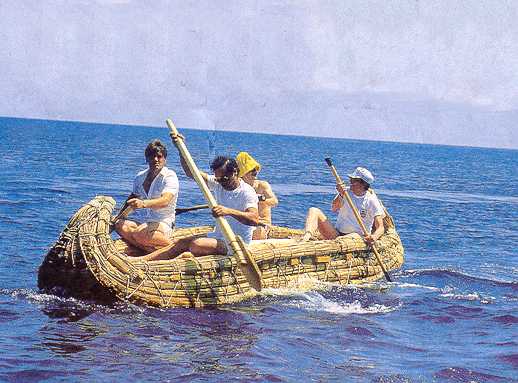
Greeks and Americans built a small papyrus boat (papyrela) that was most probably used by people of the Mesolithic period. In about 10.000 BCE inhabitants of Greece traveled from the mainland to the island of Melos and/or vice versa to get opsedian rock needed in lithic times as it was proven by a papyrus boat built in 1988. It is amazing that similar boats were built in Corfu by local fishermen until the late 1990s. The new papyrela will travel from Corfu to the Peloponese to prove that this travel was possible in Messolithic times.
 |
 Back to Cover