 |

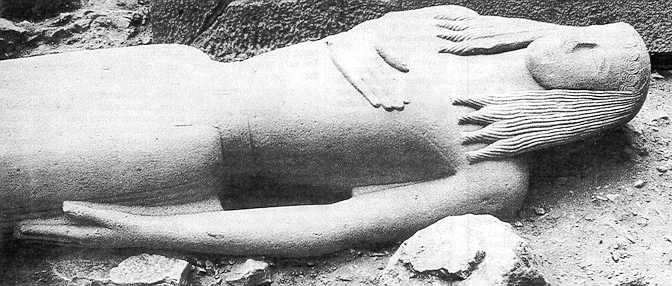
An archaic kore was unearthed on Thera (Santorini) island in November 2000. The statue, which is 2.3 m. high and weighs 750 kilos, is almost complete with only the right arm and the nose end missing.
|
An exhibition that was launched in March 2001 in Stuttgart, Germany, may shed new light on Homer's Troy. According to M. Korfman, the German excavator of Troy for the last twelve years, the latest findings can be used to prove once more that Troy VII/VIIa was destroyed after a war and was Homer's Troy. Korfman can even show us where Achilles killed Hector and where Helen stood while watching the Greek camp. The German archaeologist believes that Homer visited Troy in the 8th c. and studied the topography of the town. It is extremely important that the new archaeological findings (850 pieces as well as human bones and an underground water fountain) match with descriptions in Homer's Iliad.
 |
However, Korfman and some linguists claim that Troy is the same town as Hittite Wilusa. Ilios (another name for Troy) is similar to Wilios (Wilusa) which is known from Hittite documents. In the early 13th c. BCE Hittite king Muwattalli II signed a pact with the ruler of Wilousa. Two gods, in an almost endless list, are named in the document: Appaliuna (Apollo? the known protector of Troy) and the god of the underground watercourse of the land of Wilusa who may match with the newly found underground fountain in Troy. Those linguists assume that the reference is made to Troy, which was a Hittite town. However, no Hittite vases have been found in Troy as opposed to the plethora of mycenaean ceramics.
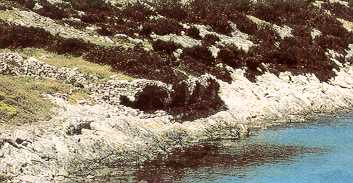 In 74 BCE Julius Caesar, a young but well known officer at the time, was captured by pirates while returning home from Asia Minor and transferred to Farmakousa, a very small and now uninhabited island close to Leros (Dodecanese, Greece). The pirates, who had not recognized their prisoner, asked for 20 silver coins as ransom money. Caesar offered them 50 as long as some of his companions were allowed to visit the nearby coast of Asia Minor in order to gather the necessary amount. Indeed, 38 days later, Julius, who had looked down upon the pirates until then, was released. A few days later, he came back to the island with a strong army and navy, captured the pirates and crucified them (Plutarch, Gaius Julius, 1-2.
Archaeologist Anastasia Dreliosi has recently visited Farmakousa in an effort of the Greek Archaeological Service to record ancient ruins on the island, which include two big towers (4-3 c. BCE) and baths.
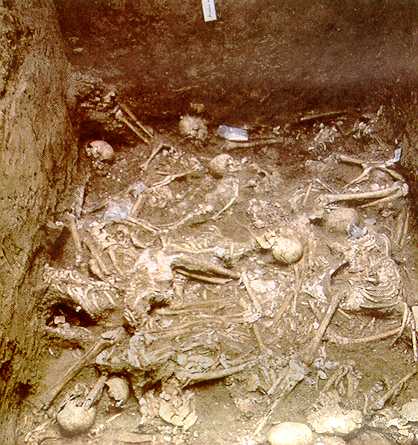 |
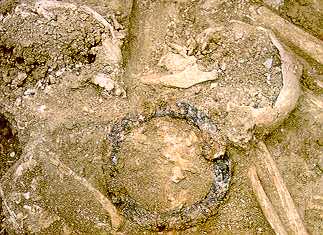
A hundred and twenty men, women and children were buried in the 4th c. BCE in a common grave in Pydna, North Greece. Some of the skeletons bore fetters around their hands, lower legs and necks which may imply that they were slaves. However, archaeologists are not in a position to offer more substantial information at this point.
 |
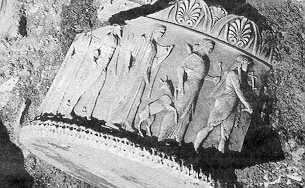 When Octavian defeated Antonius and Cleopatra in the Actium battle (31 BCE), he commissioned the founding of the town of Nikopolis, north of modern Preveza, Greece. In May 2001, in Nikopolis, archaeologists brought to light the base of a roman statue. The base, which is 0.71 cm. high and has a diameter of 1.1 m, is beautifully decorated with ancient Greek gods and goddesses. It has been dated between 29 and 27 BCE and is a product of an attic workshop of the period. The base was found in an area where Octavian had built a monument to commemorate his victory over his enemies in Actium.
 |
 Back to Cover